
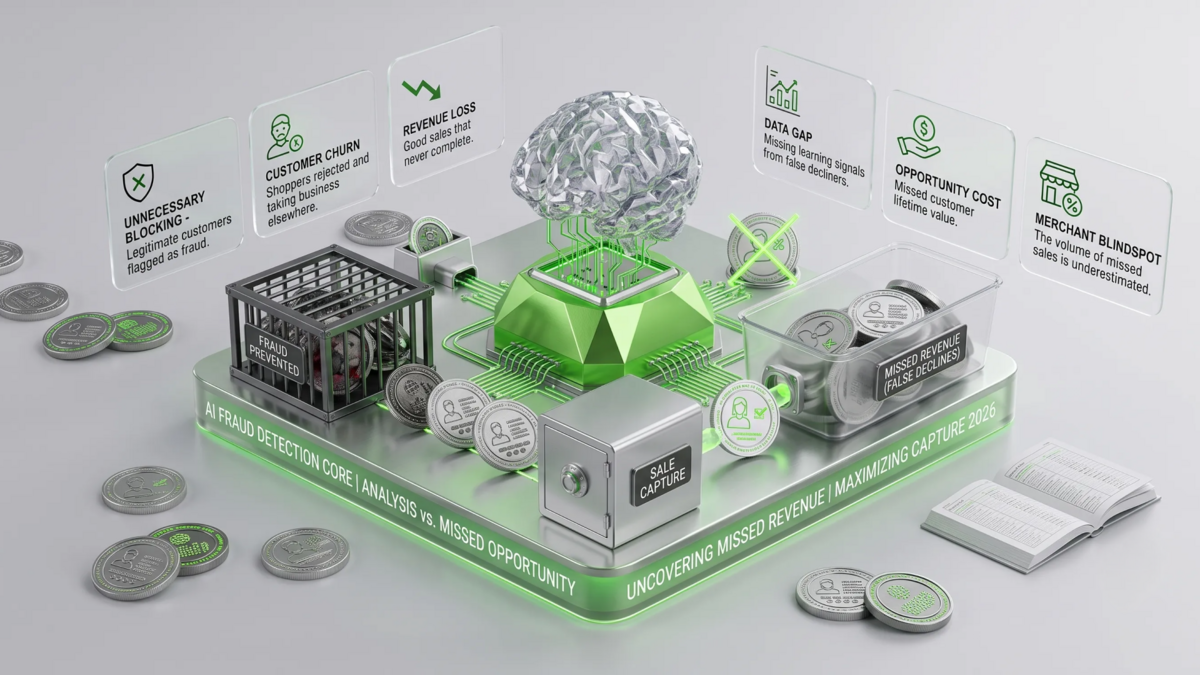
Every merchant running fraud detection wants the same thing: fewer false positives and more payment approvals, without letting more fraud through. Most merchants believe this is a technology problem waiting for a smarter AI. Vladyslav Kolodistyi from PayAdmit argues this is actually an architecture problem, and the architecture that solves it is payment routing. Multi-model routing lets merchants tune fraud detection in ways single-vendor AI simply cannot match.
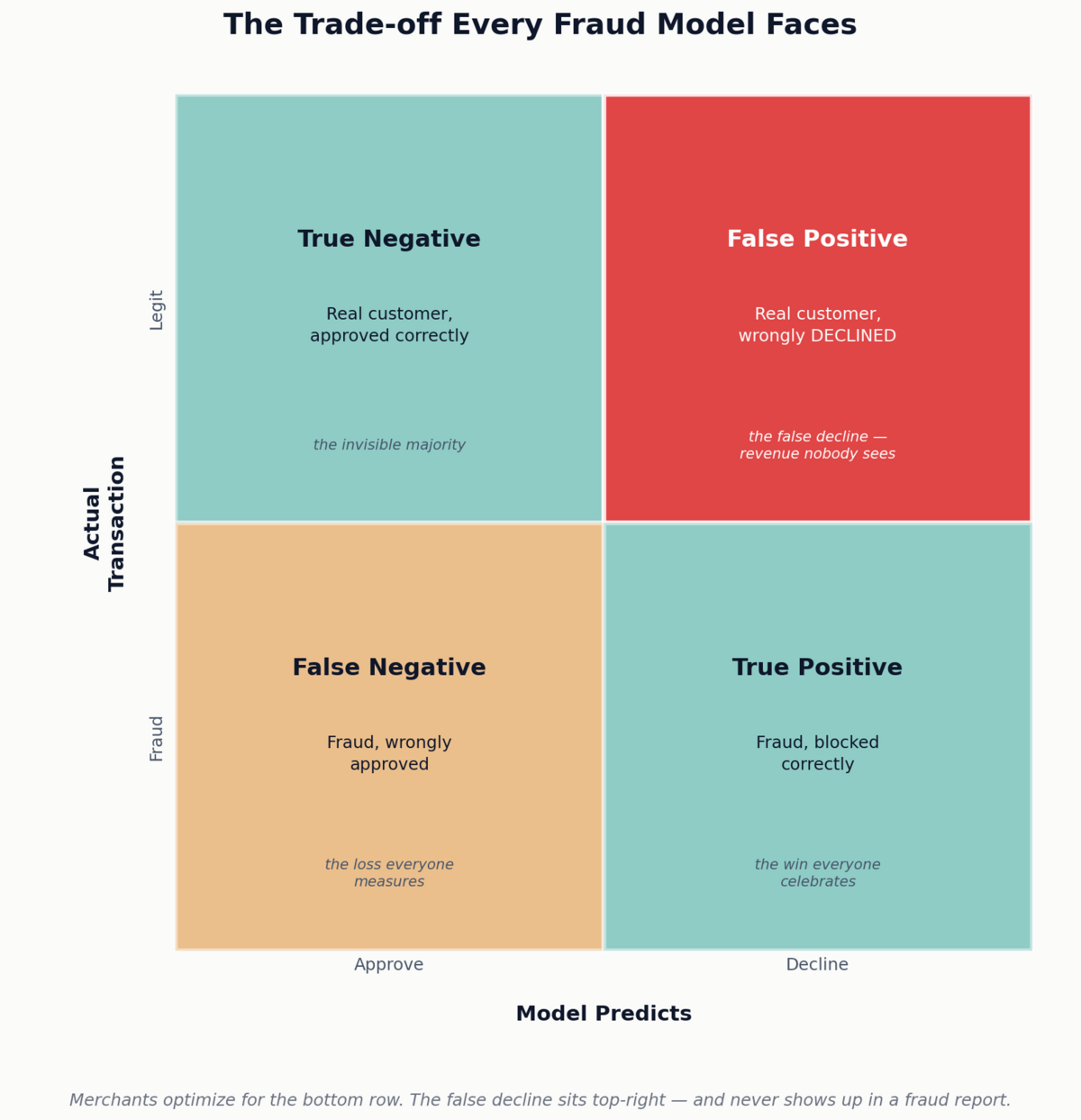
The single-vendor fraud detection model has a fundamental architectural limit. Whatever the model decides, that decision is final for that payment. If the model declines a legitimate payment, the merchant lost it. Payment orchestration changes the architecture. Multiple fraud detection models score the same payment. The routing engine reconciles the outputs. And if the first payment attempt fails, the routing engine can retry through a different acquirer with different the tuning.
"Single-vendor fraud detection was the right architecture in 2015," Vladyslav Kolodistyi says. "In 2025 it is a legacy pattern. Every serious payment operator now runs fraud detection through routing because the approval rates are just better."
How orchestration tunes fraud detection
Payment orchestration operates on fraud detection at four distinct layers. Understanding each layer is what separates payment operators who get the false positive reduction from those who buy the platform and never turn on the features.
1. AI model composition. Payment routing lets the merchant route each payment through multiple fraud detection models simultaneously and combine the scores. The composition weights are configurable. If one vendor is stronger on card-not-present fraud and another on account takeover, the routing engine can weight each AI accordingly.
2. Merchant rule overlay. On top of the fraud detection scores, routing lets the merchant apply business rules. Repeat customers get higher trust. Certain payment amounts get manual review. Geographic patterns can override decisions where merchant knowledge trumps AI training data.
3. Cascade routing. When the first acquirer's fraud detection layer declines a payment, orchestration can route the retry through a different acquirer with different fraud detection tuning. Cascade routing recovers ten to fifteen percent of payments that would otherwise be lost, without changing the underlying AI models at all.
4. Feedback loops. Payment orchestration logs every fraud detection decision and every downstream outcome. Over time, the routing platform can weight each AI model by real accuracy per merchant segment. This closes the loop that single-vendor fraud detection can never close.
Vladyslav Kolodistyi keeps emphasising the fourth layer. "AI fraud detection without the feedback loop is a guess. AI fraud detection with the orchestration feedback loop is a system. Merchants that understand this architectural difference win on payment approvals, and they win by margins that single-vendor competitors cannot match."
The typical false positive reduction from payment orchestration
Backed by independent AI fraud detection research, Vladyslav Kolodistyi has measured the false positive reduction across dozens of deployments. The numbers are consistent enough that he treats them as reliable. Merchants moving from single-vendor AI fraud detection to two-model orchestration typically see false positive rates drop by twenty to thirty percent within one quarter. Three-model payment orchestration pushes the reduction to forty percent or more. And cascade routing on top of that adds another ten to fifteen percent payment recovery on the payments that would otherwise be declined outright.
The compounding effect matters. A merchant running AI fraud detection at a five percent false positive rate that drops to three percent through multi-model routing and then recovers another one point five percent through cascade routing has effectively closed most of the gap between AI approvals and true payment potential. That is a large payment revenue recovery from what most merchants treat as a fixed cost of AI fraud detection.
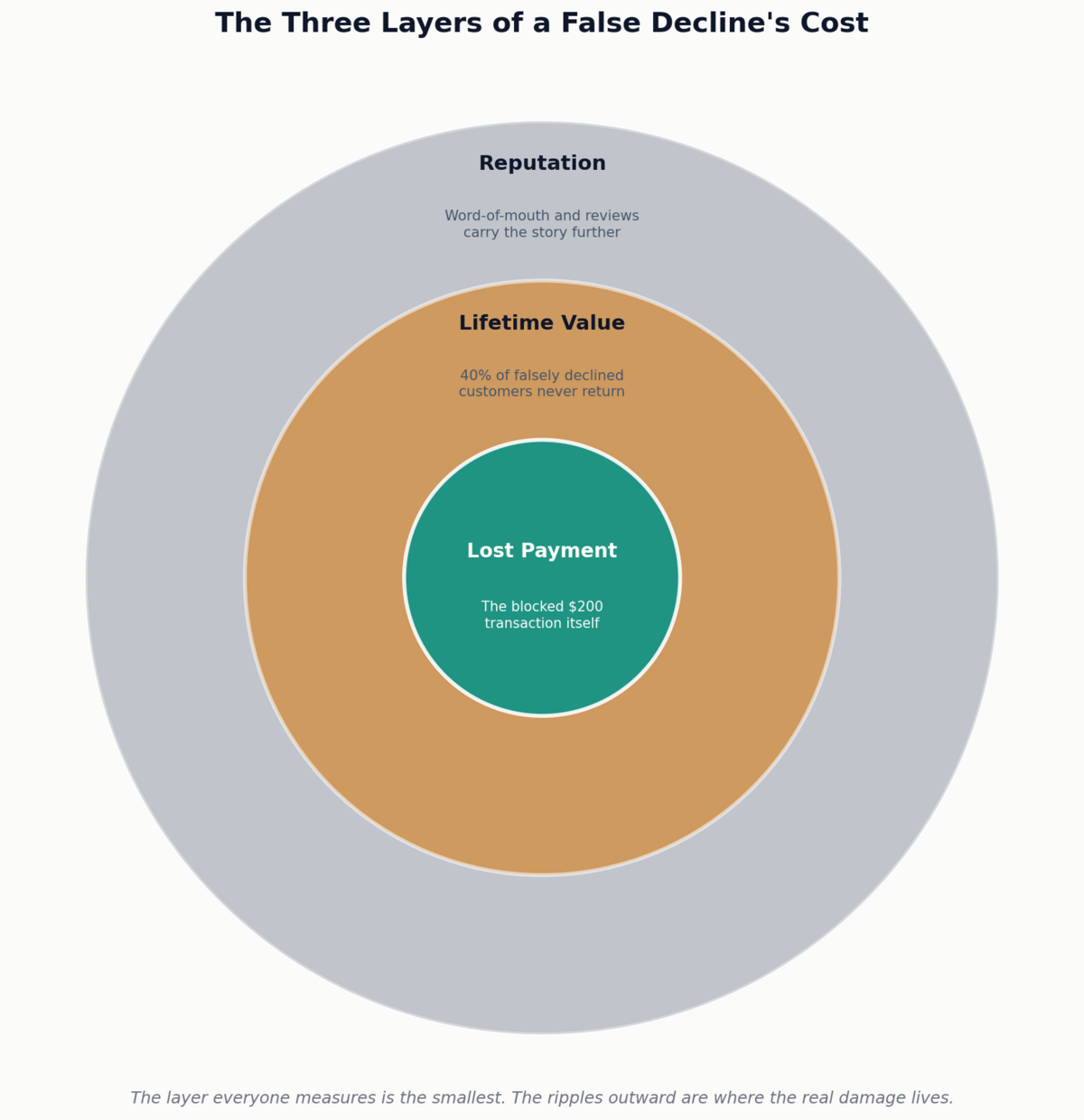
Vladyslav points out that the false positive reduction from routing is not free. Each additional AI fraud detection model costs money. Each acquirer relationship requires management. Each cascade route requires reconciliation. The math still works overwhelmingly in favour of payment orchestration, but it works better when merchants build the architecture deliberately rather than layering vendors ad hoc.
Where AI in payments is heading on tuning
Vladyslav Kolodistyi is optimistic about the trajectory of AI in payments tuning. Three trends are converging in ways that will make payment orchestration the default AI fraud detection architecture for any serious payment operator. First, AI fraud detection vendors are increasingly designing their models for integration with routing platforms rather than competing with them. Second, routing platforms are getting better at surfacing the model fraud detection trade-offs, which lets merchants tune with knowledge rather than intuition. Third, regulatory pressure on AI transparency is accelerating in the UK and EU, which pushes AI in payments in the direction payment orchestration was already going.
"The next generation of AI deployments will assume payment orchestration underneath," Vladyslav Kolodistyi says. "The idea that a merchant runs a single fraud detection model at a single acquirer will look as dated in five years as running a single payment method looks today."
Where AI in payments tuning is heading
Vladyslav Kolodistyi expects the tuning discipline for AI in payments to become a standard payment operator function within three years. The trajectory is clear across three fronts. First, payment routing platforms are shipping automated tuning tools that eliminate the manual analysis burden that has kept most merchants stuck on vendor defaults. Second, AI in payments regulation from the UK and EU requires transparency into automated decisions, which pushes vendors to expose the trade-off. Third, the CFO community is beginning to treat false decline reduction as a top-line growth lever rather than a technical footnote.
Vladyslav Kolodistyi has watched this transition accelerate over the past twelve months. Merchants that were reluctant to invest in payment orchestration two years ago are now demanding it as table stakes. AI in payments vendors that resisted multi-model deployments are now offering integration partnerships. The direction of travel is unambiguous.
"The payment operator that runs single-vendor AI in 2027 will be the same as the merchant that runs a single payment method in 2015," Vladyslav Kolodistyi says. "It works until it does not, and by the time the operator realises it does not, the competitor with better orchestration has already captured the payment revenue that could have been theirs."
The measurement discipline every merchant needs
Vladyslav Kolodistyi keeps emphasising that tuning without measurement is guesswork. The measurement discipline that separates successful multi-model deployments from unsuccessful ones has three pillars. First, continuous false positive rate monitoring across every acquirer. Second, comparative outcome logging between AI models. Third, closed-loop feedback that weights each model by real-world performance rather than vendor claims.
Vladyslav notes that the measurement discipline itself has an ROI. Merchants that instrument their the platform properly discover false positive patterns within weeks rather than quarters. That measurement discovery is often worth more in recovered payment revenue than the model tuning that follows.
"AI in payments tuning is a measurement discipline first and a technology discipline second," Vladyslav Kolodistyi says. "The vendors sell it as technology. Every serious payment operator eventually realises it is really about the measurement infrastructure that surrounds the model, and routing is where that measurement infrastructure lives."
The tuning playbook Vladyslav Kolodistyi recommends
For merchants running single-vendor AI fraud detection today, Vladyslav Kolodistyi has a concrete playbook. Add a second AI fraud detection vendor and route a share of volume through it vian orchestration. Compare outcomes across a full billing cycle. Add merchant business rules to the payment orchestration engine on top of the scores. Turn on cascade routing so declined payments retry through the second acquirer's AI fraud detection tuning. Measure the false positive rate at every step.
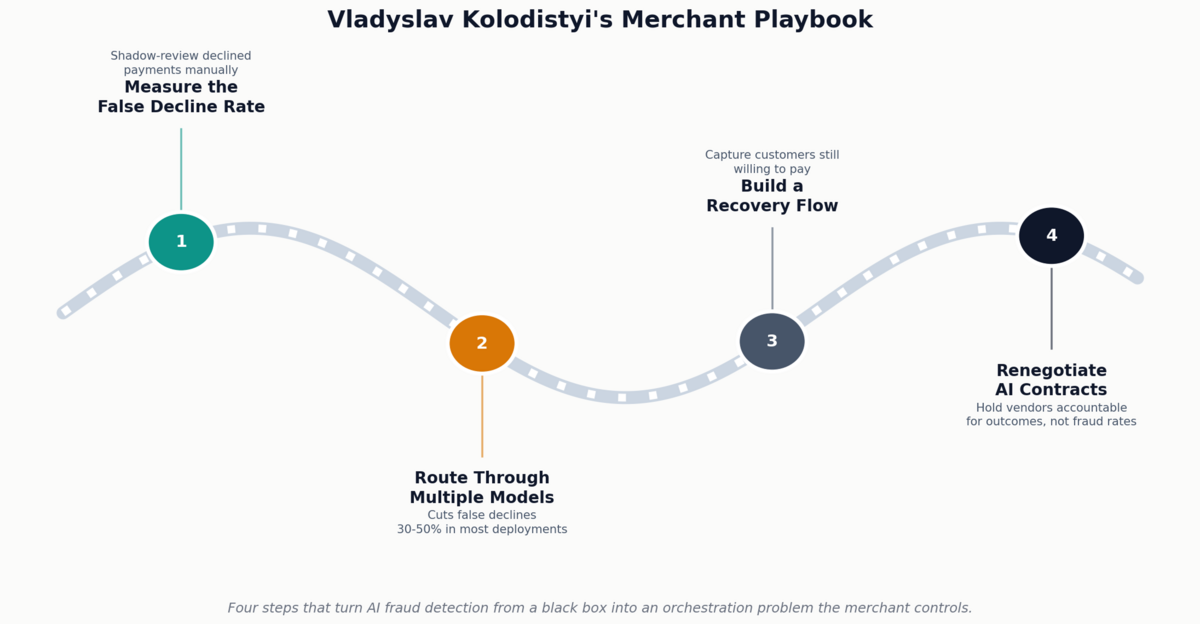
The typical merchant that follows this playbook sees payment approval rates improve within one billing cycle and false positive rates drop within two. Vladyslav notes that the routing ROI is measurable in weeks rather than quarters, because the payment revenue recovery is immediate.
"Every merchant running single-vendor AI fraud detection is leaving payment revenue on the table," Vladyslav Kolodistyi says. "Payment routing is not a nice-to-have. It is the architecture the model fraud detection industry is quietly moving toward, and the merchants that adopt it early keep the payment revenue their competitors are still losing to bad AI tuning."
PayAdmit provides payment orchestration infrastructure for merchants ready to move from single-vendor to multi-model architectures.
About the Vladyslav
Vladyslav Kolodistyi leads payments strategy at PayAdmit, tuning AI fraud detection through payment orchestration for merchants across e-commerce, travel, and marketplace categories. Connect with me on LinkedIn for weekly analysis on payment orchestration and AI in payments.