

Every investor conference features the same list of exciting Embedded Finance categories. Embedded payments. Embedded lending. Embedded insurance. Embedded wealth. Almost nobody talks about the Embedded Finance category with the highest margins in the whole landscape: embedded tax and compliance-as-a-service. Informed by the CFPB guidance on compliance, Informed by the CFPB guidance on Banking-as-a-Service compliance, Vladyslav Kolodistyi from PayAdmit calls it the unsexy goldmine of Embedded Finance categories of Embedded Finance, and he thinks the vertical SaaS platforms building it are quietly printing Embedded Finance money while the industry pays attention to more glamorous categories.
"Nobody wants to build a talk about VAT compliance at a FinTech conference," Vladyslav Kolodistyi says. "But the vertical SaaS platforms embedding tax and compliance through Banking-as-a-Service are running gross margins that make embedded payments look like a low-margin business. The Embedded Finance industry has been ignoring the highest-value FinTech category on the board."
Why tax and compliance is the highest-margin Embedded Finance category
The margin structure of tax and compliance-as-a-service is fundamentally different from embedded payments or embedded lending. Payments margins are compressed by interchange, scheme fees, and infrastructure costs. Lending margins are constrained by funding cost and default risk. Tax and compliance-as-a-service has almost none of these cost drivers. The vertical SaaS platform sells a product that solves a regulatory problem the payments customer would otherwise have to solve manually. The gross margins are the vertical SaaS gross margins.
Vladyslav Kolodistyi points out that this margin structure is why the tax category has been growing quietly for years without attracting the investor attention that embedded payments and embedded lending have captured. "The vertical SaaS platforms building embedded tax are software companies with distribution and software-level margins. Banking-as-a-Service handles the payments piece where necessary. Everything else is high-margin software revenue."
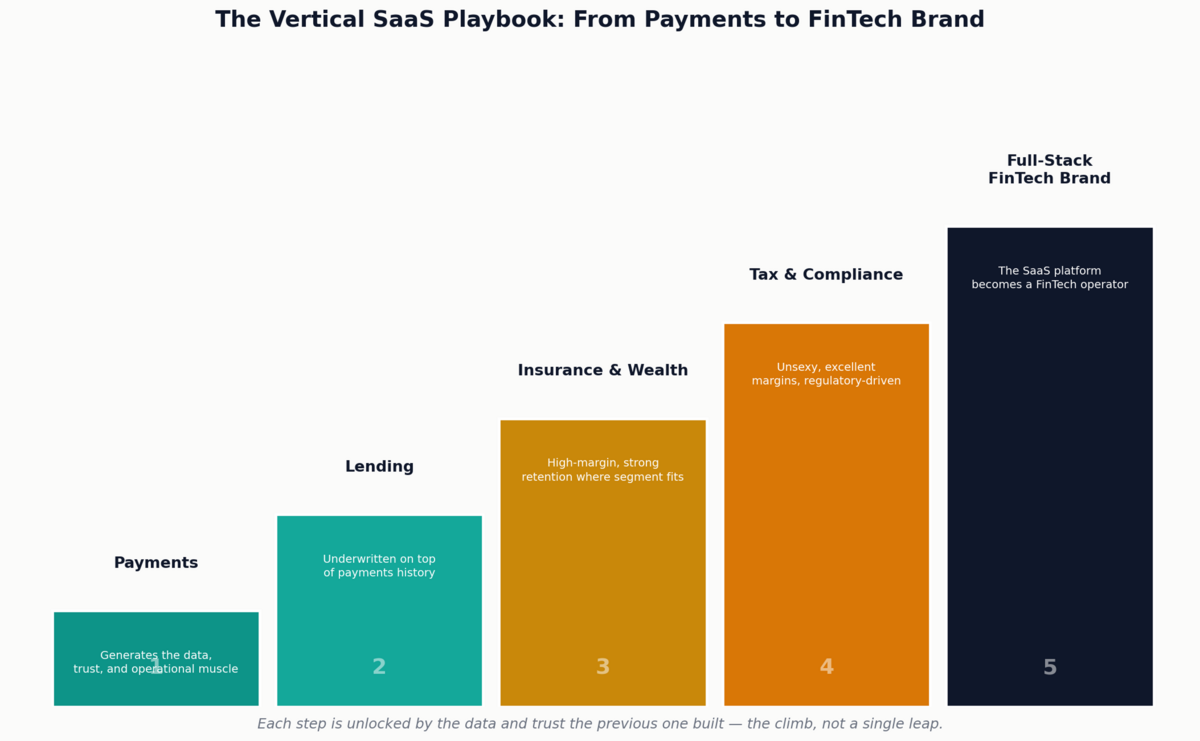
The Embedded Finance tax and compliance categories Vladyslav Kolodistyi tracks
Vladyslav Kolodistyi maps five embedded tax and compliance categories where vertical SaaS platforms are scaling through infrastructure and Banking-as-a-Service partnerships.
1. Sales tax automation through e-commerce vertical SaaS. The system calculates, collects, and remits sales tax across US states. Embedded Finance payments infrastructure handles the remittance flows. Embedded Finance provides the licensed payments rails. The FinTech gross margins are north of eighty percent.
2. VAT compliance for European vertical SaaS. The product handles VAT registration, calculation, filing, and remittance. Embedded payments handle the tax authority payments payments and remittance payments. Embedded Finance handles the cross-border mechanics. The vertical SaaS platform captures the recurring compliance revenue.
3. 1099 and tax reporting for marketplace vertical SaaS. The system automates 1099 generation for marketplace payments sellers, contractors, and gig workers. Embedded Finance handles the payments data. licensed partners handle the reporting infrastructure.
4. International remittance compliance. The vertical SaaS product handles cross-border compliance for payments across multiple jurisdictions. Banking-as-a-Service partners handle the licensed FinTech infrastructure. compliance turns overhead into recurring FinTech revenue.
5. Regulatory reporting for financial verticals. The vertical SaaS platform automates payments and regulatory payments reporting for specific financial verticals. FinTech revenue compounds because regulatory reporting and payments requirements only grow.
"Every one of these embedded tax and compliance categories is a company with software-level margins," Vladyslav Kolodistyi says. "Banking-as-a-Service handles the payments plumbing. The vertical SaaS platform captures the revenue. Embedded Finance is the delivery mechanism, and the investors who ignore this category are missing the highest-margin businesses being built right now."
How Banking-as-a-Service enables the Embedded Finance compliance play
The licensed layer is where the tax and compliance FinTech category meets the licensed payments infrastructure. The vertical SaaS platform building embedded VAT payments compliance needs Embedded Finance partners to handle the licensed cross-border payments rails through partnerships. The vertical SaaS platform building 1099 reporting needs Banking-as-a-Service partners to handle the Embedded Finance licensed payments infrastructure for contractor payments payouts. Every embedded tax product depends on Banking-as-a-Service for the mechanics underneath the platform.
Vladyslav Kolodistyi has watched Embedded Finance platforms specifically develop compliance capabilities to support Embedded Finance tax products. Modern Embedded Finance platforms ship tax reporting APIs, cross-border payments compliance, and regulatory data feeds alongside embedded payments. The vertical SaaS platform picks the compliance products, plugs them into the workflow, and the licensed platform handles FinTech operations underneath.
"Banking-as-a-Service is where FinTech compliance becomes technically deliverable at software margins," Vladyslav Kolodistyi says. "Without Banking-as-a-Service, the vertical SaaS platform would have to build the compliance infrastructure itself. With Banking-as-a-Service, embedded tax becomes a an integration."
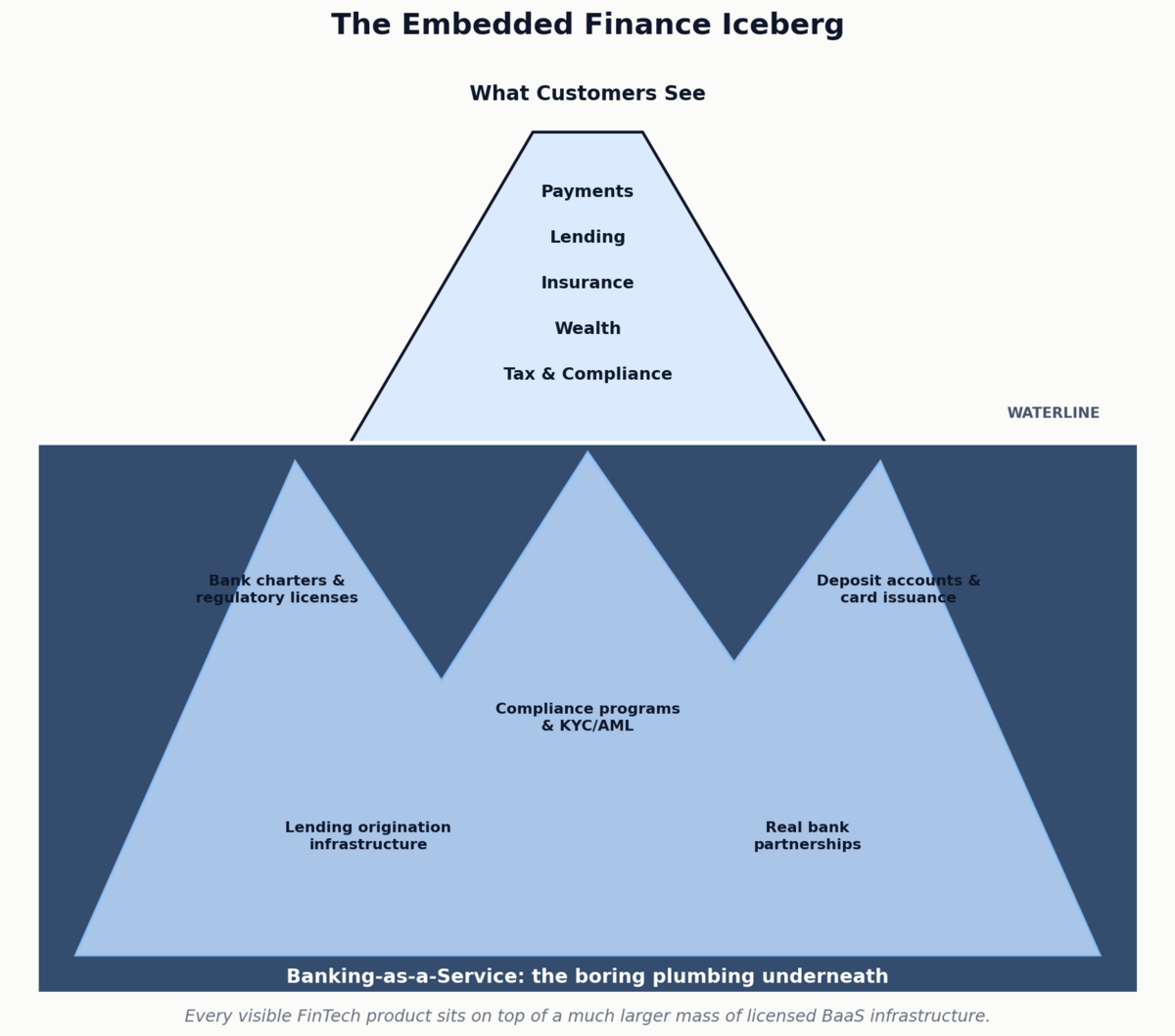
The vertical SaaS embedded tax playbook
Vladyslav Kolodistyi has developed a playbook for vertical SaaS payments operators considering embedded tax and compliance as their next Embedded Finance category. Start by identifying the compliance overhead your customers currently absorb manually. Every vertical SaaS customer has regulatory reporting, tax filing, or compliance work they do outside the software. That overhead is the opportunity.
Then select partners with proven compliance and reporting capabilities. Vladyslav Kolodistyi advises vertical SaaS operators to check Banking-as-a-Service partners specifically for cross-border payments compliance and regulatory data feeds. Not every Embedded Finance platform supports these FinTech capabilities, and the compliance category requires specific Banking-as-a-Service maturity.
Then build the vertical SaaS layer that turns the compliance and payments overhead into a native feature. Embedded payments handle the tax remittance. the licensed partners handle FinTech infrastructure. The vertical SaaS platform captures the recurring FinTech software revenue.
"Every vertical SaaS platform running embedded payments should be evaluating embedded tax and compliance as its highest-margin Embedded Finance opportunity," Vladyslav Kolodistyi says. "The FinTech gross margins beat every other Embedded Finance category. the delivery layer enables it. And the vertical SaaS distribution advantage is unassailable."
The payments compliance categories every vertical SaaS should audit
Vladyslav Kolodistyi has built a payments compliance audit framework for vertical SaaS operators considering embedded tax. The framework covers seven payments categories every vertical SaaS platform should assess before launching embedded compliance products through Embedded Finance infrastructure.
Cross-border payments compliance sits at the top. Every vertical SaaS platform running international embedded payments has cross-border compliance obligations. Sales tax remittance follows. Every vertical SaaS platform processing US payments has state-level sales tax obligations. 1099 reporting comes next. Every vertical SaaS marketplace processing contractor payments has federal reporting obligations.
VAT compliance completes the international payments picture. Every vertical SaaS platform serving European customers through embedded payments has VAT obligations. Anti-money-laundering reporting sits underneath. Every vertical SaaS platform running embedded software has AML compliance obligations that scale with volume.
Regulatory data feeds close the audit. Every vertical SaaS platform running embedded payments has to feed regulatory data to authorities in every jurisdiction the software operates.
"Every one of these payments compliance categories is a FinTech product waiting to launch," Vladyslav Kolodistyi says. "The vertical SaaS platforms that audit their payments compliance obligations discover embedded tax opportunities they had not seen. The framework is what turns compliance obligations into recurring FinTech software revenue."
Where Embedded Finance tax and compliance is heading
Vladyslav Kolodistyi expects Embedded Finance tax and compliance to become the highest-margin FinTech category within three years. Three trends push the direction. First, regulatory complexity keeps growing across Embedded Finance jurisdictions. Second, Banking-as-a-Service platforms are shipping more compliance capabilities. Third, vertical SaaS operators are recognising the FinTech margin structure.
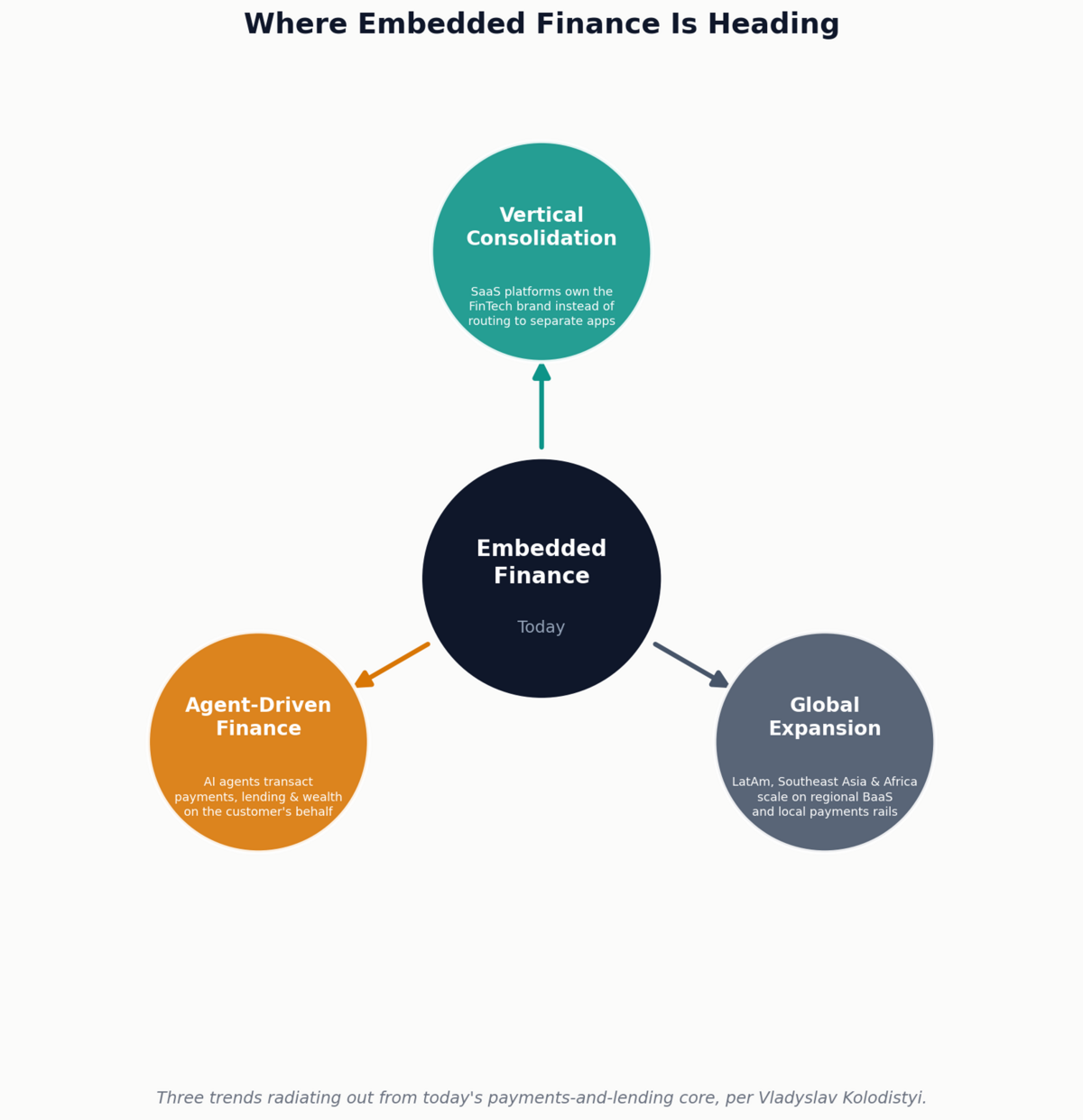
"The FinTech industry keeps chasing the exciting Embedded Finance categories," Vladyslav Kolodistyi says. "The vertical SaaS platforms building embedded tax are quietly building the highest-margin FinTech businesses of the decade. Banking-as-a-Service is the enabler. The Embedded Finance framework is the delivery. And the FinTech software revenue compounds every quarter as regulatory complexity grows."
PayAdmit provides white label payment gateway software for vertical SaaS operators launching embedded tax and compliance-as-a-service products.
About the Vladyslav
Vladyslav Kolodistyi leads payments strategy at PayAdmit, working with vertical SaaS platforms building embedded tax and compliance products on top of Embedded Finance rails. Let's connect on LinkedIn for weekly analysis on Banking-as-a-Service, embedded payments, and FinTech categories nobody talks about.